About 50,000 Canada Post employees have been without a collective agreement since the winter
There’s a chance your snail mail may slow to a crawl soon.
Canadian Union of Postal Workers national president Mike Palecek called negotiations with Canada Post “frustrating” July 13, and warned residents the postal service is forcing his bargaining units to seriously contemplate strike action.
About 50,000 postal workers have been without a collective agreement since the winter.
The sides have met to discuss a new deal more than 100 times. However, the union is setting a final strike vote for Sept. 9.
“This round of bargaining is likely going to define the postal service going forward for a generation,” Palecek said in an interview. “We’re putting all kinds of issues on the bargaining table that are not just for ourselves but the public as well. Postal workers have done absolutely everything in their power to address these without a labour dispute. We campaigned, we organized town hall meetings, we changed the government. Still, nothing has happened. We’re on to our last resort: a strike. That’s where Canada Post is driving us.”
Canada Post “set us on to this path” through an “absolute refusal” to negotiate, he said.
Philipe Legault, a spokesperson for Canada Post, said a mediator was brought into the collective bargaining process in late 2017. However, the postal service will not comment on specific aspects of negotiations.
“Canada Post negotiators are working hard to find common ground with CUPW and believe a quick resolution is in the best interest of customers and employees,” he said in an email.
A number of issues built up over the last few years because the previous Conservative government refused to negotiate with the union, Palecek said.
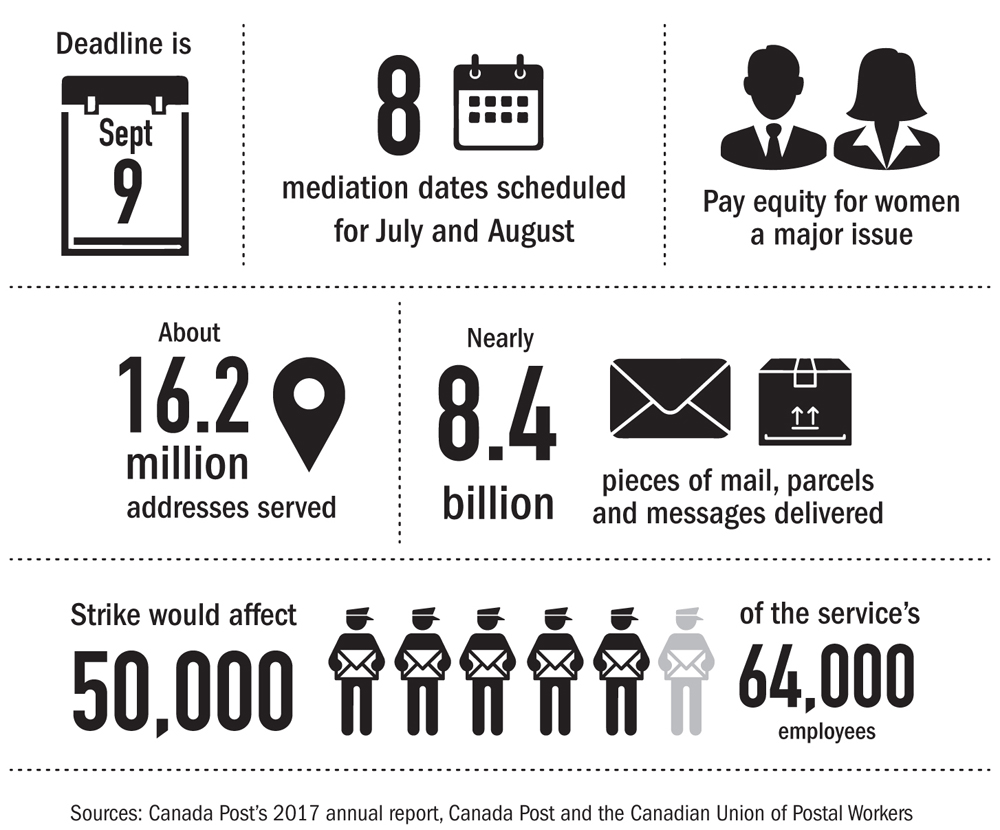
About 8,000 of the employees work in a rural or suburban setting, with the majority being women. They are paid about 30 per cent less than their 42,000 urban-area counterparts.
The union is also pushing for the establishment of a Canada Post bank, electrification of the postal service’s 13,000-vehicle fleet, and installation of electric vehicle-charging stations at post offices across the country.
“This is an opportunity to bring in new services that will not only bring in revenue but that the public actually needs,” Palecek said.