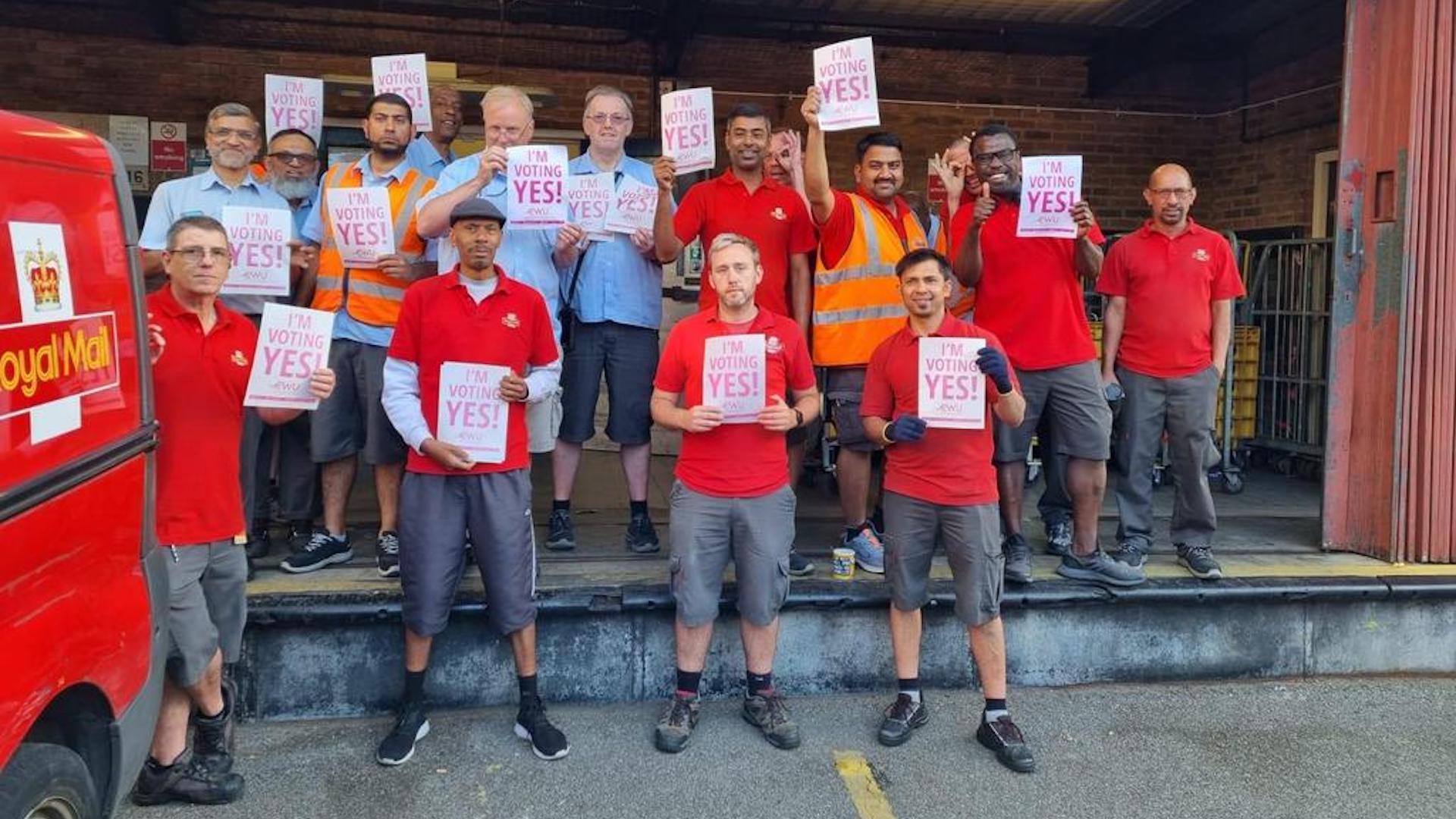
Royal Mail workers voted overwhelmingly to reject the company’s proposed change to terms and conditions in the second vote of the summer.
“Enough is enough,” says Kevin Simpson, a Royal Mail postal officer from Southend-on-Sea.
“We were putting ourselves at risk throughout the pandemic and I think it’s quite clear that, without working people, this country would come to a stand still,” he told The Big Issue. “We actually need to be recognised for the work that we’re doing.”
Simpson is one of 115,000 other members of the Communications Workers Union (CWU) who has voted to reject new terms and conditions and a below-inflation pay rise from Royal Mail. On a turnout of 72.2 per cent, a whopping 98.7 per cent voted yes.
Friday’s walkout is the first for postal staff in almost a decade, the other dates set for August 31 then September 8 and 9.
After being hailed as key workers during the pandemic, postal workers are feeling more undervalued than ever. While the company is focused on improving productivity to cut costs – it’s losing a million pounds a day – for those putting the mail through letterboxes, the workload is simply too high.
“You have post men and women who you can look in the eye and see that they are not only physically but mentally exhausted,” described Simpson. “They’re fed up with coming into work knowing damn fine that they would not be able to complete their jobs, despite caring about delivering a high quality service.”
Royal Mail turned a £416 million profit last year domestically, with the growth in parcels during the pandemic giving the company a “short-term lifeline” explained a spokesperson.
But it’s now at a “crossroads”. “We need to adapt much more quickly to the growing number of parcels and declining letters to survive,” they continued.
After announcing an operating loss of £92 million in the first quarter of 2022, the company is desperate to make cost savings and has said it cannot rule out job cuts if CWU members go ahead with the strike.
“The negative commercial impact of any strike action will only make pay rises less affordable and could put jobs at risk,” said a Royal Mail spokesperson. “The CWU has a responsibility to recognise the reality of the situation Royal Mail faces as a business, and to engage urgently on the changes required.”
But for the CWU, this is a “threat” to union members. The union is, alongside the railways union the RMT, having somewhat of a moment in industrial relations. The union has recently balloted and organised strikes of EE and BT Group workers who went on strike for two days at the end of July into August, as well as for those working for the Post Office who will be striking on August 26th (the Post Office is a separate company to Royal Mail).
While CEO Simon Thompson earned £596,000 in 2021 – 26 times the average wage of £11.70 an hour for a frontline Royal Mail worker – there have been multiple reports of postal workers relying on food banks to survive.
And the dispute is now going beyond pay. Both the company and the union have been issuing statements accusing the other of misleading journalists or releasing inaccurate information.
Against the backdrop of 11 per cent inflation, Royal Mail insists it has offered a 5.5 per cent pay rise. CWU calls this “a lie”, explaining that there has only been a 2 per cent increase “imposed” on staff with an additional 1.5 per cent subject to accepting new terms and conditions.
The final 2 per cent is “a new ‘above and beyond’ bonus,” a Royal Mail spokesperson said, “worth up to 2 per cent of salary for CWU grade operational staff who achieve it”.
In a note to journalists, a CWU spokesperson added: “We urge you to make it absolutely clear this pay offer is the imposition of 2 per cent and nothing else.”
Where Royal Mail claims to offer “the best terms and conditions in the industry”, union members accuse bosses of a “race to the bottom” to erode workers rights in the gig economy.
As Simpson is keen to point out, workers are angry, and the record-breaking turnouts and summer of strikes are a clear indication.
“(We) are people that are genuinely fed up and frustrated, not only by this employer that is running this business into the ground, but also by the fact that this cost of living crisis is driving them to the point of despair.”
CWU assistant secretary Andy Furey went further: “Some of the breathtaking arrogance from some of these largest employers is almost reminiscent of the Victorian era,” he said, “back when the aristocracy looked down their collective noses at ‘the peasants’ way below them.
“Well the CWU and other trade unions have got a message for them. Those days are long gone and they’re not coming back.”